Buckland P.I. & Lemdahl G. 2025. Fossil beetle assemblages indicate changes in landscape openness. PAGES MAGAZINE, 33(1)
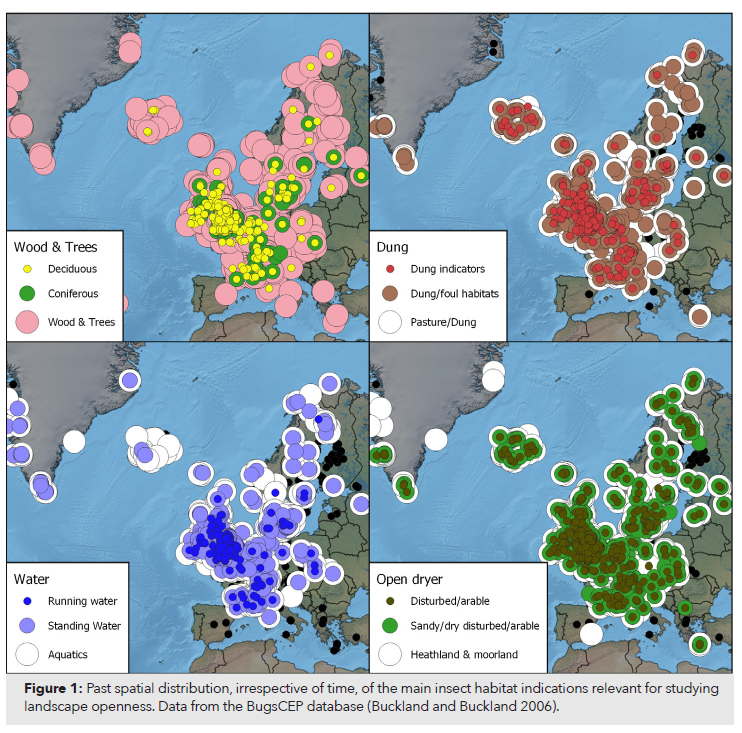
September 15, 2025. This article by Buckland and Lemdahl explores how fossil beetles, the most species-rich insect group, serve as sensitive indicators of past environmental and climatic changes, particularly landscape openness and human activity during the Holocene. By analysing beetle assemblages from both natural and archaeological sites, researchers can reconstruct past ecosystems, detect shifts in vegetation cover, and identify signs of human impact such as grazing, agriculture, and deforestation. The BugsCEP database, a comprehensive resource of over 11,000 insect taxa, supports this work by categorising insect ecologies and providing spatial data. While traditional methods have relied on statistical analyses and visual interpretation, recent advances suggest that machine learning and AI offer promising new avenues for interpreting complex paleoenvironmental data. These developments highlight the potential of fossil insects as powerful tools in reconstructing past landscapes and understanding human-environment interactions over millennia.